
The Growing Role of Coding and AI in CBSE Curriculum – What Parents Should Know
How CBSE’s focus on coding and AI is shaping students’ future and what parents can do to help
This blog explores CBSE’s integration of coding and AI in the curriculum, its impact on students’ learning and careers, challenges in adoption, and how parents can play a supportive role in this digital shift.

Listen to this article
The Growing Role of Coding and AI in CBSE Curriculum – What Parents Should Know
Why CBSE is adding coding and AI
The Central Board of Secondary Education (CBSE) has been steadily updating its curriculum to align with the demands of the 21st century. With the National Education Policy 2020 emphasizing digital literacy, coding and artificial intelligence (AI) are no longer optional skills. They are considered foundational for future careers and everyday problem solving. The inclusion of coding and AI is designed to ensure that students in Classes 6 to 12 are prepared not only for board exams but also for an increasingly technology-driven world.
India’s education system has traditionally been theory-heavy, but this change signals a shift toward applied, skill-based learning. For students, it means exposure to logic, computational thinking, and real-world applications much earlier than before.
Overview of AI curriculum in schools
CBSE introduced AI as an optional skill subject in 2019, beginning with Classes 8 and 9. Today, the framework has expanded to include modules for Classes 6 to 12. The curriculum is structured around three main areas: awareness, skills, and application. In the awareness stage, students are introduced to the basic concepts of AI, including data, algorithms, and ethics. The skills stage emphasizes coding, problem solving, and projects. Finally, the application stage pushes students to design practical AI models and use cases that address real-world challenges.
Practical exposure is a key feature. Students are encouraged to work on projects such as chatbot development, image recognition tasks, or data analysis problems. Schools have started using project-based assessment rather than only written exams, which makes the learning more interactive and impactful.
Benefits for students future careers
Learning coding and AI early provides multiple benefits beyond academics. Some of the key advantages include:
Improved logical reasoning and problem-solving skills
Preparation for careers in emerging fields like data science, robotics, and AI research
Increased adaptability to new technologies and platforms
Confidence in handling digital tools that are used in higher education and workplaces
Parents often ask whether coding and AI are too advanced for younger students. In practice, CBSE has adapted content to be age-appropriate. For example, younger classes may use block-based coding tools such as Scratch, while older students move to Python, machine learning basics, and ethics of AI.
Challenges in adoption and teaching
Despite the promise, schools and families face several challenges in adopting coding and AI education:
Access to infrastructure such as computers, internet, and software
Teacher training to handle new and evolving concepts
Balancing coding with traditional subjects without overwhelming students
Ensuring inclusivity for students from rural or economically weaker backgrounds
These challenges highlight the need for both schools and parents to play active roles in ensuring students benefit fully from the AI-focused curriculum. Support in the form of additional resources, after-school programs, or guidance at home makes a significant difference.
Examples of AI projects in classrooms
Across CBSE schools, students are already experimenting with AI in creative ways. Some examples include:
Building chatbots that can answer simple questions on topics like health or environment
Using image recognition to identify objects, animals, or plants
Creating sentiment analysis tools to study social media posts
Applying machine learning models to predict outcomes from small datasets
These projects not only reinforce concepts but also give students confidence in solving practical problems. They also encourage teamwork, as many assignments are collaborative.
Parental role in supporting digital skills
Parents may feel uncertain if they are not from technical backgrounds, but their support is still crucial. Encouragement, curiosity, and providing a safe digital environment are the most important contributions. Simple steps include asking children to explain what they are learning, allowing them to explore educational coding platforms at home, or ensuring screen time is balanced with offline learning.
Parents can also guide children toward free or low-cost learning resources online. Platforms like Scratch, Code.org, and Edzy’s AI-powered revision tools help reinforce classroom learning without heavy costs.
How Edzy integrates AI learning
At Edzy, we recognize that AI and coding are no longer niche skills but essential ones. Our platform integrates AI-powered tools that not only help students revise NCERT subjects but also build familiarity with technology. Features like interactive flashcards, adaptive quizzes, and gamified streaks mirror real-world AI applications. By practicing on Edzy, students become comfortable with the idea of AI as a supportive tool in their education rather than something abstract or intimidating.
Parents can also track their child’s progress, making the learning transparent and collaborative. This bridges the gap between home and school learning while fostering digital confidence in both students and families.
Future of CBSE AI focused curriculum
The role of AI in the CBSE curriculum is only expected to expand. With rapid advancements in generative AI, data-driven learning, and robotics, students will likely see more integration of project-based assessments and cross-disciplinary learning. For example, subjects like Social Science could include data analysis of historical events, while Biology could use simulations powered by AI models.
The future belongs to students who can combine subject knowledge with digital fluency, and CBSE’s AI curriculum is a step in that direction.
For parents, staying informed and engaged ensures children make the most of these opportunities. With schools, Edzy, and families working together, India’s next generation of learners will be equipped with skills that prepare them for both exams and life beyond the classroom.
Suggested blogs
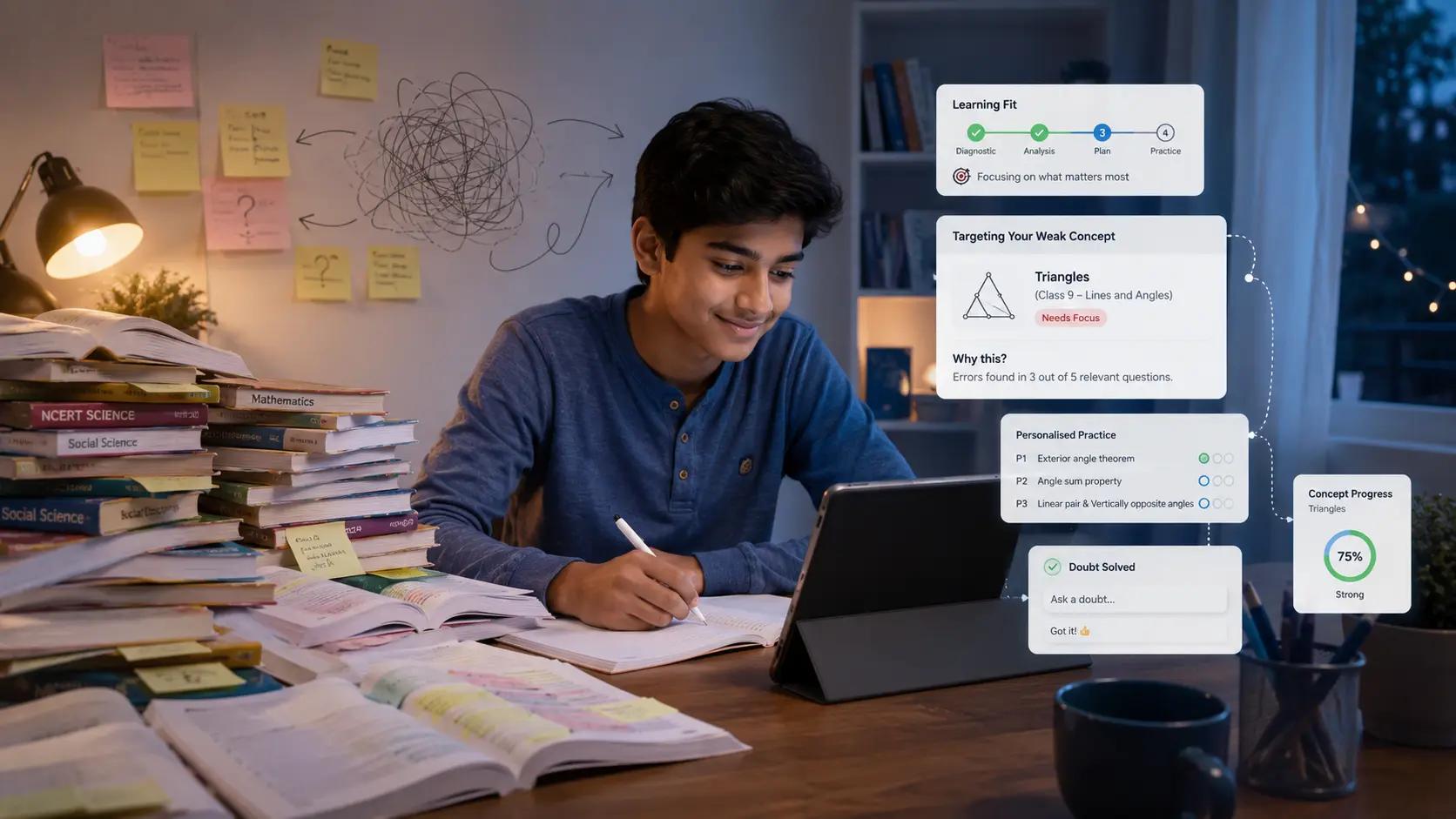
What Personalised Learning Actually Means for a CBSE Student (And Why It's Not What Most People Think)
Most students hear "personalised learning" and think pace. The real advantage is precision here's what that looks like for CBSE preparation.

How to Actually Use AI for CBSE Board Exam Preparation (Without Wasting Time on It)
Most students use AI the wrong way during revision. Here's the method that actually builds retention before board exams.
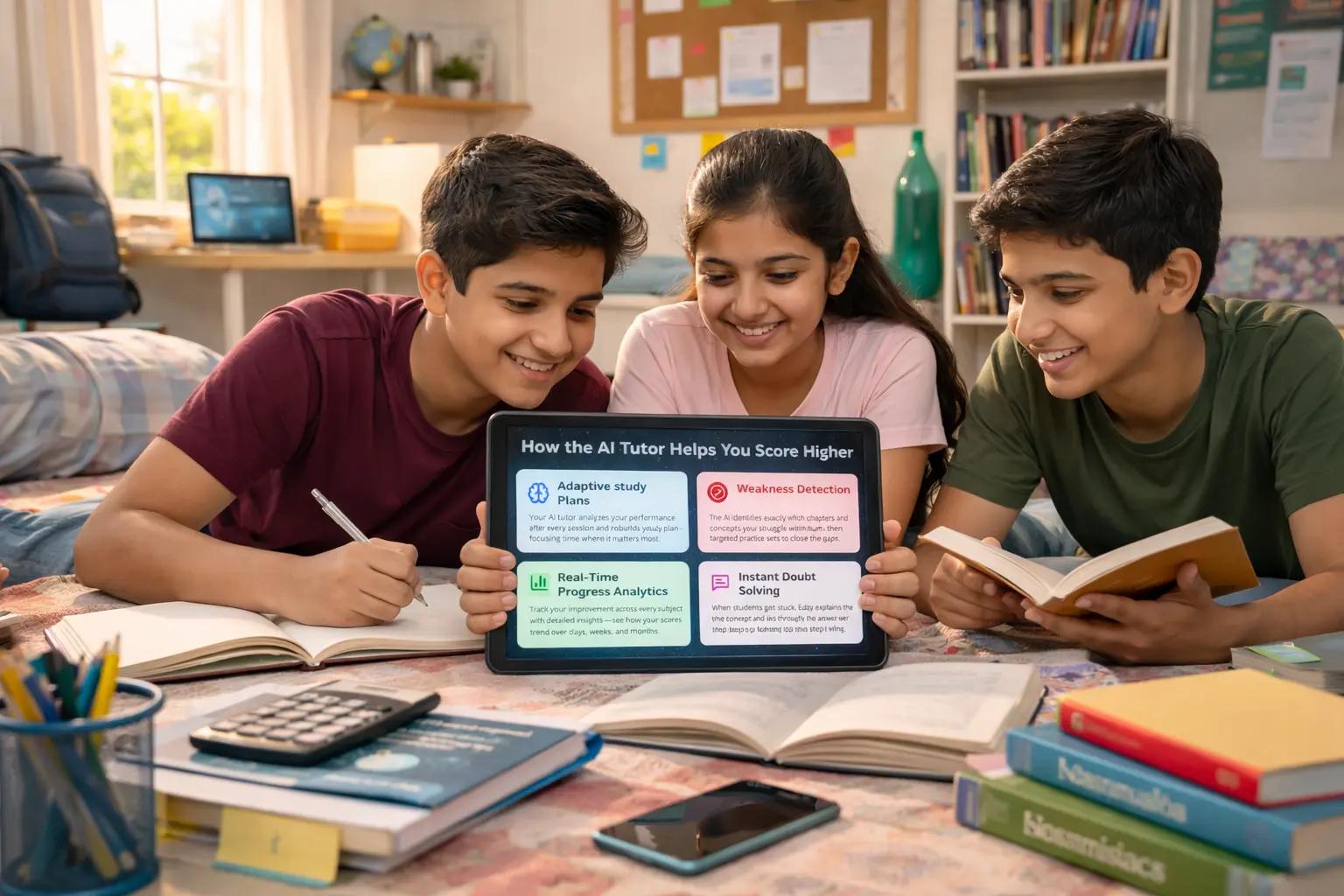
How AI-Based Practice Helps CBSE Class 10 Students Transition to Class 11
Navigating the academic leap from Class 10 to Class 11 with AI support

How AI Can Help CBSE Class 10 Students Revise Smarter During Holidays
Discover how AI tools can make holiday study effective yet enjoyable for CBSE Class 10 students.