

Brand Logo
Login
Search
Brand Logo

Edzy for Classes 6-12

Edzy is a personal AI tutor for CBSE and State Board students, with curriculum-aligned guidance, practice, revision, and study plans that adapt to each learner.

  • Email: always@edzy.ai
  • Phone: +91 96256 68472
  • WhatsApp: +91 96256 68472
  • Address: Sector 63, Gurgaon, Haryana

Follow Edzy

Browse by Class

  • CBSE Class 6
  • CBSE Class 7
  • CBSE Class 8
  • CBSE Class 9
  • CBSE Class 10
  • CBSE Class 11
  • CBSE Class 12
Explore the CBSE resource hub

Explore Edzy

  • Study Resources
  • Free Study Tools
  • Best Apps for Board Exams
  • Edzy vs ChatGPT
  • About Us
  • Why We Built Edzy
  • Blog
  • CBSE AI Tutor

Support & Legal

  • Help & FAQs
  • Accessibility
  • Privacy Policy
  • Terms & Conditions
  • Refund Policy
  • Cookie Policy
  • Site Directory

© 2026 Edzy. All rights reserved.

Curriculum-aligned learning paths for students in Classes 6-12.

CBSE
Class 6
Physical Education and Well Being
Khel Yatra
Yoga for Daily Life

Question Bank

Practice Hub

Question Bank: Yoga for Daily Life

Structured practice
Question Practice

Practice chapter questions in a cleaner, exam-ready flow

Start with curated question sets, move into full module views when needed, and keep discovering related practice without losing your place in the chapter.

Question Bank - Yoga for Daily Life

View all (135)
Q1.

What does Ahimsa in Yama emphasize?

Single Answer MCQ
Q-00147054
View explanation
Q2.

Which aspect of Ashtāṅga Yoga focuses on cleanliness?

Single Answer MCQ
Q-00147055
View explanation
Q3.

What is the main goal of Prānāyāma in Ashtāṅga Yoga?

Single Answer MCQ
Q-00147056
View explanation
Q4.

Which of the following is not one of the Yamas?

Single Answer MCQ
Q-00147057
View explanation
Q5.

What does Santosha teach us?

Single Answer MCQ
Q-00147058
View explanation
Q6.

In which aspect of Ashtāṅga Yoga do you learn to master your senses?

Single Answer MCQ
Q-00147059
View explanation
Q7.

Which principle of Niyama encourages self-discipline?

Single Answer MCQ
Q-00147060
View explanation
Q8.

What does Dhyāna refer to in Ashtāṅga Yoga?

Single Answer MCQ
Q-00147061
View explanation
Q9.

Which aspect of Ashtāṅga Yoga is primarily about blissful experience?

Single Answer MCQ
Q-00147062
View explanation
Q10.

How does Pratyāhāra help in practicing yoga?

Single Answer MCQ
Q-00147063
View explanation
Q11.

What practice is encouraged by Brahmacharya?

Single Answer MCQ
Q-00147064
View explanation
Q12.

Which of the following statements is true regarding Ashtāṅga Yoga?

Single Answer MCQ
Q-00147065
View explanation
Q13.

Which Yama teaches non-stealing?

Single Answer MCQ
Q-00147066
View explanation
Q14.

What is the significance of Svādhyāya in Ashtāṅga Yoga?

Single Answer MCQ
Q-00147067
View explanation
Q15.

Which concept describes the stability achieved through concentration?

Single Answer MCQ
Q-00147068
View explanation
Q16.

Why is it important to practice yoga daily according to Ashtāṅga Yoga?

Single Answer MCQ
Q-00147069
View explanation
Q17.

What does Ahimsa in Yama signify?

Single Answer MCQ
Q-00147070
View explanation
Q18.

Which of the following best describes Satya?

Single Answer MCQ
Q-00147071
View explanation
Q19.

What is the main focus of Asteya?

Single Answer MCQ
Q-00147072
View explanation
Q20.

Brahmacharya is associated with which of the following ideas?

Single Answer MCQ
Q-00147073
View explanation
Q21.

Aparigraha encourages people to:

Single Answer MCQ
Q-00147074
View explanation
Q22.

Which of the following describes a situation illustrating Ahimsa?

Single Answer MCQ
Q-00147075
View explanation
Q23.

In what way does practicing Satya improve relationships?

Single Answer MCQ
Q-00147076
View explanation
Q24.

How can Brahmacharya benefit one's focus?

Single Answer MCQ
Q-00147077
View explanation
Q25.

Which Yama discourages attachment to material possessions?

Single Answer MCQ
Q-00147078
View explanation
Q26.

What does the word 'Yoga' mean in Sanskrit?

Single Answer MCQ
Q-00147079
View explanation
Q27.

Ahimsa can be practiced by:

Single Answer MCQ
Q-00147080
View explanation
Q28.

Which of the following is an aspect of Ashtāṅga Yoga?

Single Answer MCQ
Q-00147081
View explanation
Q29.

Which of the following is an outcome of living according to Aparigraha?

Single Answer MCQ
Q-00147082
View explanation
Q30.

What is the primary purpose of practicing Pratyāhāra in Yoga?

Single Answer MCQ
Q-00147083
View explanation
Q31.

Which of the following reflects a common misconception about Yama?

Single Answer MCQ
Q-00147084
View explanation
Q32.

Which Yoga discipline emphasizes self-study and knowledge improvement?

Single Answer MCQ
Q-00147085
View explanation
Q33.

How does practicing Yama contribute to overall well-being?

Single Answer MCQ
Q-00147086
View explanation
Q34.

Ahimsa, a principle in Yoga, mainly teaches us to:

Single Answer MCQ
Q-00147087
View explanation
Q35.

Which Yama can be seen as a foundation for other ethical practices in life?

Single Answer MCQ
Q-00147088
View explanation
Q36.

The asana known for enhancing flexibility and strength is:

Single Answer MCQ
Q-00147089
View explanation
Q37.

Which of the following best describes Dhyāna in Yoga?

Single Answer MCQ
Q-00147090
View explanation
Q38.

What can be a direct benefit of practicing Yoga for students?

Single Answer MCQ
Q-00147091
View explanation
Q39.

Which aspect of Yoga helps individuals develop self-discipline?

Single Answer MCQ
Q-00147092
View explanation
Q40.

When is the International Day of Yoga celebrated?

Single Answer MCQ
Q-00147093
View explanation
Q41.

Which physical benefit is most associated with ‘Prānāyāma’?

Single Answer MCQ
Q-00147094
View explanation
Q42.

What does the term 'Samādhi' refer to in Yoga?

Single Answer MCQ
Q-00147095
View explanation
Q43.

In which text are the Yoga Sutras composed?

Single Answer MCQ
Q-00147096
View explanation
Q44.

Ahimsa is primarily focused on which of the following?

Single Answer MCQ
Q-00147097
View explanation
Q45.

Which principle of Yoga advises being content with what one has?

Single Answer MCQ
Q-00147098
View explanation
Q46.

What is the meaning of the Sanskrit word 'yuj' from which Yoga is derived?

Single Answer MCQ
Q-00147099
View explanation
Q47.

Which of the following is NOT a component of the Yama in Ashtāṅga Yoga?

Single Answer MCQ
Q-00147100
View explanation
Q48.

What is Ahimsa in Yoga?

Single Answer MCQ
Q-00147101
View explanation
Q49.

Which Niyama focuses on self-study and knowledge improvement?

Single Answer MCQ
Q-00147102
View explanation
Q50.

Which aspect of Yoga involves controlling the senses?

Single Answer MCQ
Q-00147103
View explanation
Q51.

Which practice in Yoga can help improve focus and reduce stress?

Single Answer MCQ
Q-00147104
View explanation
Q52.

What does Santosha emphasize in personal discipline?

Single Answer MCQ
Q-00147105
View explanation
Q53.

Which of the following best describes the purpose of Yoga?

Single Answer MCQ
Q-00147106
View explanation
Q54.

What does Tapas signify in the Niyama of Yoga?

Single Answer MCQ
Q-00147107
View explanation
Q55.

Which of the following statements about Yoga is true?

Single Answer MCQ
Q-00147108
View explanation
Q56.

What is the longest-term benefit of practicing Yoga daily?

Single Answer MCQ
Q-00147109
View explanation
Q57.

What does Aparigraha teach in the practice of Yoga?

Single Answer MCQ
Q-00147110
View explanation
Q58.

Which of the following is least emphasized in the practice of Yoga?

Single Answer MCQ
Q-00147111
View explanation
Q59.

Which of the following best describes practical application of Pratyāhāra?

Single Answer MCQ
Q-00147112
View explanation
Q60.

What is the meaning of Niyama in the context of yoga?

Single Answer MCQ
Q-00147113
View explanation
Q61.

Which of the following is NOT one of the Niyamas?

Single Answer MCQ
Q-00147114
View explanation
Q62.

Svadhyaya, one of the Niyamas, emphasizes which of the following?

Single Answer MCQ
Q-00147115
View explanation
Q63.

Tapas, as a Niyama, mainly focuses on which aspect?

Single Answer MCQ
Q-00147116
View explanation
Q64.

Which Niyama promotes an attitude of contentment?

Single Answer MCQ
Q-00147117
View explanation
Q65.

How can practicing Niyama impact your daily life?

Single Answer MCQ
Q-00147118
View explanation
Q66.

Which Niyama encourages cleanliness of body and mind?

Single Answer MCQ
Q-00147119
View explanation
Q67.

Why is consistency important in the practice of Niyama?

Single Answer MCQ
Q-00147120
View explanation
Q68.

Applying Tapas in everyday situations can lead to which outcome?

Single Answer MCQ
Q-00147121
View explanation
Q69.

What is the relationship between Niyama and mental well-being?

Single Answer MCQ
Q-00147122
View explanation
Q70.

Which of the following best describes the goal of practicing Niyama?

Single Answer MCQ
Q-00147123
View explanation
Q71.

Which principle of Niyama emphasizes the importance of humility?

Single Answer MCQ
Q-00147124
View explanation
Q72.

How does understanding Niyama contribute to personal discipline?

Single Answer MCQ
Q-00147125
View explanation
Q73.

Which of the following Niyamas can lead to better self-management in stressful situations?

Single Answer MCQ
Q-00147126
View explanation
Q74.

What is the primary goal of prānāyāma?

Single Answer MCQ
Q-00147127
View explanation
Q75.

Which of the following techniques is NOT a part of prānāyāma?

Single Answer MCQ
Q-00147128
View explanation
Q76.

What is Kapalabhati primarily known for?

Single Answer MCQ
Q-00147129
View explanation
Q77.

How does prānāyāma benefit emotional well-being?

Single Answer MCQ
Q-00147130
View explanation
Q78.

Which breathing technique involves a hissing sound?

Single Answer MCQ
Q-00147131
View explanation
Q79.

What role does Nadi Shodhana play in yoga?

Single Answer MCQ
Q-00147132
View explanation
Q80.

Which of the following is a primary focus during prānāyāma practice?

Single Answer MCQ
Q-00147133
View explanation
Q81.

In which situation is prānāyāma NOT recommended?

Single Answer MCQ
Q-00147134
View explanation
Q82.

What does 'Bhramari' mean in the context of prānāyāma?

Single Answer MCQ
Q-00147135
View explanation
Q83.

How long should a beginner typically hold the breath during prānāyāma?

Single Answer MCQ
Q-00147136
View explanation
Q84.

What is the correct way to start a prānāyāma session?

Single Answer MCQ
Q-00147137
View explanation
Q85.

Why is it important to practice prānāyāma regularly?

Single Answer MCQ
Q-00147138
View explanation
Q86.

What aspect of health can prānāyāma significantly improve?

Single Answer MCQ
Q-00147139
View explanation
Q87.

Which breathing method involves inhaling and exhaling through one nostril at a time?

Single Answer MCQ
Q-00147140
View explanation
Q88.

What might be a common misconception about prānāyāma?

Single Answer MCQ
Q-00147141
View explanation
Q89.

What does the practice of prānāyāma ultimately aim to achieve?

Single Answer MCQ
Q-00147142
View explanation
Q90.

What is the primary purpose of practicing Āsana in yoga?

Single Answer MCQ
Q-00147143
View explanation
Q91.

Which of the following is NOT an effect of regularly practicing Āsana?

Single Answer MCQ
Q-00147144
View explanation
Q92.

What does the term 'Āsana' literally mean?

Single Answer MCQ
Q-00147145
View explanation
Q93.

Which of the following Āsanas is typically performed to promote relaxation?

Single Answer MCQ
Q-00147146
View explanation
Q94.

Which Āsana is known for improving balance and stability?

Single Answer MCQ
Q-00147147
View explanation
Q95.

What is a common guideline for safely performing Āsana?

Single Answer MCQ
Q-00147148
View explanation
Q96.

What role does breath play in the practice of Āsana?

Single Answer MCQ
Q-00147149
View explanation
Q97.

Which of the following postures is commonly used to improve focus and concentration?

Single Answer MCQ
Q-00147150
View explanation
Q98.

What is the recommended duration for holding an Āsana for beginners?

Single Answer MCQ
Q-00147151
View explanation
Q99.

Which Āsana is often referred to as the 'Cobra Pose'?

Single Answer MCQ
Q-00147152
View explanation
Q100.

Which of the following is an important factor in determining the effectiveness of Āsana practice?

Single Answer MCQ
Q-00147153
View explanation
Q101.

Which posture is primarily used to stretch the back muscles?

Single Answer MCQ
Q-00147154
View explanation
Q102.

What potential risk is associated with improper practice of Āsana?

Single Answer MCQ
Q-00147155
View explanation
Q103.

Which Āsana involves bending forward while sitting?

Single Answer MCQ
Q-00147156
View explanation
Q104.

Which posture requires a twist of the torso?

Single Answer MCQ
Q-00147157
View explanation
Q105.

Which of the following is a dynamic sequence that includes multiple Āsanas?

Single Answer MCQ
Q-00147158
View explanation
Q106.

What does the term 'Pratyāhāra' specifically refer to in yoga?

Single Answer MCQ
Q-00147186
View explanation
Q107.

Which practice is NOT a component of Pratyāhāra?

Single Answer MCQ
Q-00147188
View explanation
Q108.

Why is mastering the senses important in the practice of yoga?

Single Answer MCQ
Q-00147189
View explanation
Q109.

In the context of Pratyāhāra, which of the following senses is commonly targeted?

Single Answer MCQ
Q-00147190
View explanation
Q110.

Which technique is commonly used to aid in Pratyāhāra?

Single Answer MCQ
Q-00147191
View explanation
Q111.

What could be a sign that someone is effectively practicing Pratyāhāra?

Single Answer MCQ
Q-00147192
View explanation
Q112.

How can one practice Pratyāhāra in daily life?

Single Answer MCQ
Q-00147193
View explanation
Q113.

What role does awareness play in mastering the senses during Pratyāhāra?

Single Answer MCQ
Q-00147194
View explanation
Q114.

Which of the following best describes the first step toward Pratyāhāra?

Single Answer MCQ
Q-00147195
View explanation
Q115.

Pratyāhāra is considered a bridge between which two aspects of Ashtāṅga Yoga?

Single Answer MCQ
Q-00147196
View explanation
Q116.

Which statement is true regarding the benefits of practicing Pratyāhāra regularly?

Single Answer MCQ
Q-00147197
View explanation
Q117.

Which of the following practices is NOT recommended while practicing Pratyāhāra?

Single Answer MCQ
Q-00147198
View explanation
Q118.

What is the primary objective of Pratyāhāra in the context of yoga?

Single Answer MCQ
Q-00147199
View explanation
Q119.

What is a key psychological benefit of practicing Pratyāhāra?

Single Answer MCQ
Q-00147200
View explanation
Q120.

Which of the following best exemplifies the practice of Pratyāhāra?

Single Answer MCQ
Q-00147201
View explanation
Q121.

What is the meaning of the Sanskrit word 'yuj' from which Yoga is derived?

Single Answer MCQ
Q-00147753
View explanation
Q122.

Which of the following is one of the eight aspects of Ashtāṅga Yoga?

Single Answer MCQ
Q-00147754
View explanation
Q123.

What does 'Niyama' refer to in Ashtāṅga Yoga?

Single Answer MCQ
Q-00147755
View explanation
Q124.

Which Niyama emphasizes self-study and knowledge improvement?

Single Answer MCQ
Q-00147756
View explanation
Q125.

What is the primary aim of Yoga as described in the text?
Single Answer MCQ
Q-00147757
View explanation
Q126.

Which aspect of Ashtāṅga Yoga focuses on mastery over breath?

Single Answer MCQ
Q-00147758
View explanation
Q127.

What does Tapas represent in the context of Niyama?

Single Answer MCQ
Q-00147759
View explanation
Q128.

Which aspect of Ashtāṅga Yoga helps in turning attention inward?

Single Answer MCQ
Q-00147760
View explanation
Q129.

How is Yoga described in terms of mental health?

Single Answer MCQ
Q-00147761
View explanation
Q130.

Which Niyama promotes contentment?

Single Answer MCQ
Q-00147762
View explanation
Q131.

Which of the following best describes 'Samādhi' in Ashtāṅga Yoga?

Single Answer MCQ
Q-00147763
View explanation
Q132.

Which guideline in Niyama emphasizes cleanliness?

Single Answer MCQ
Q-00147764
View explanation
Q133.

How does Yoga help with stress management?

Single Answer MCQ
Q-00147765
View explanation
Q134.

What is the final stage of Ashtāṅga Yoga?

Single Answer MCQ
Q-00147766
View explanation
Q135.

What role does discipline play in Yoga according to the text?

Single Answer MCQ
Q-00147767
View explanation
Learn Better On The App
Gamified progress

Learning That Feels Rewarding

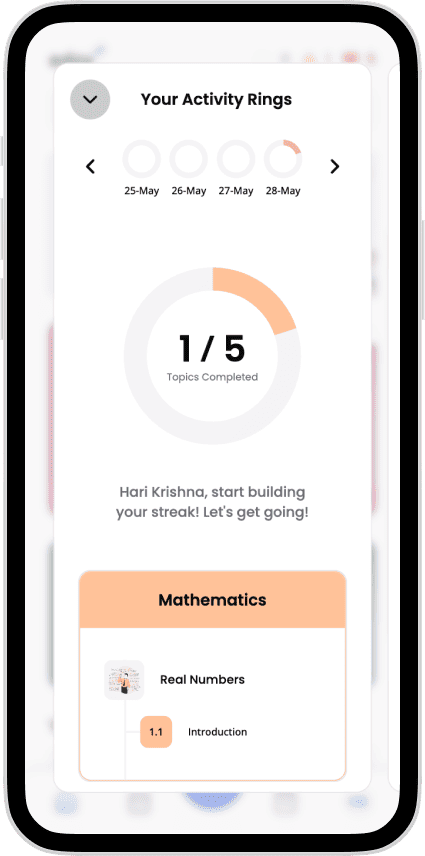
Earn XP, unlock badges, and turn revision into a habit that feels motivating.

XP and badges
Higher engagement

Faster access to practice, revision, and daily study flow.

Edzy mobile app preview